Apple Releases Siri with iPhone 4S
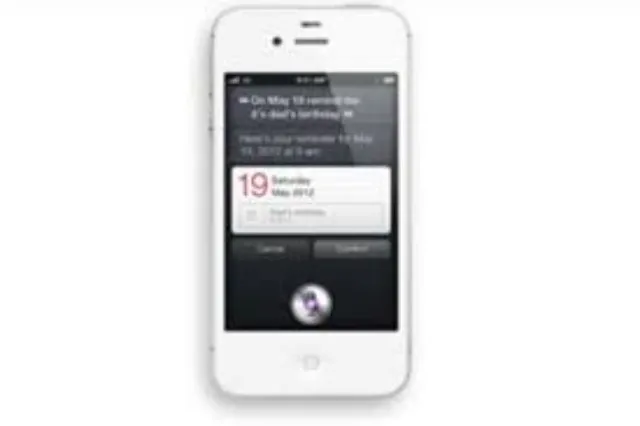
On 4 October 2011, Apple announced Siri as an integrated feature of the iPhone 4S, making a conversational voice assistant, capable of natural-language queries, task execution, and third-party service calls, available to a mass consumer audience for the first time at that scale.
Background
Voice control on consumer devices had existed for years before 2011, but it worked in a narrow way. You had to learn the commands. Say the right phrase in the right order, and the phone would dial a number or open an app. Say anything else and it would fail. These systems matched your words against a fixed list. They did not try to understand what you meant.
The research that would eventually change this had been running for years inside government-funded labs. SRI International, a research organisation that had spun out of Stanford University, led a project called CALO (Cognitive Assistant that Learns and Organises) under funding from DARPA, the US Defense Advanced Research Projects Agency. The goal was a software assistant that could handle the messy, open-ended requests that people actually make. Speech recognition at the time typically relied on hidden Markov models, a statistical method for matching sequences of sounds to words, combined with statistical language models that estimated which words were likely to follow which. These methods worked, but they needed careful setup and broke down quickly outside their trained domain.
The CALO work produced a prototype assistant called Siri, which became a standalone app on the Apple App Store in February 2010. Apple acquired the company behind it later that year.
What happened
On 4 October 2011, Apple announced the iPhone 4S. The headline hardware changes were modest compared to previous releases, but Apple spent a large part of its presentation on Siri, now built directly into the operating system rather than sold as a separate app. Users could ask questions in plain speech, set reminders, send messages, get directions and pull information from third-party services, all without learning any particular phrasing. Siri would attempt to work out what the user wanted from however they happened to say it.
The system did not do all of this on the phone itself. The audio of a spoken request was sent to Apple’s servers, where the heavy computation happened, and the result was sent back. This kept the processing load off the device’s hardware, at the cost of needing a data connection. Speech recognition used technology from Nuance Communications, a company that had been building voice software commercially for over a decade, integrated into a broader pipeline that handled intent recognition and service routing.
What made the launch significant in practical terms was scale. Apple sold over four million iPhone 4S units in its opening weekend, and the device reached a global consumer base that had no particular interest in artificial intelligence as a topic. For most of them, Siri was simply the thing you talked to. That kind of reach was different in kind from anything an academic prototype or enterprise voice product had achieved. The question the field had long debated, whether ordinary people would speak naturally to a machine in everyday life, got an answer quickly and publicly.
Why it mattered
Siri's inclusion in the iPhone 4S brought natural-language voice interaction to hundreds of millions of consumers within months of launch, normalising the expectation that a handheld device could interpret open-ended spoken requests rather than fixed voice commands. The system drew on work originally developed at SRI International under DARPA's CALO programme, and its commercial success prompted rapid competitive responses from Google, Microsoft and Amazon, accelerating investment in conversational AI throughout the decade. Siri also demonstrated that cloud-backed inference, offloading recognition and language understanding to remote servers, was a viable deployment architecture for resource-constrained devices.
Organisations
apple, SRI International, DARPA
Sources
- Apple Launches iPhone 4S, iOS 5 & iCloud. Apple Newsroom. Primary source
- Conversational In-Car Dialog Systems: The Past, Present, and Future. ACM Digital Library. Secondary
Cite this page
AI Achievements. (2011). Apple Releases Siri with iPhone 4S. Retrieved 2026-10-01, from https://achievements.ai/milestone/apple-launched-siri-on-iphone-4s
@misc{achievements_apple_launched_siri_on_iphone_4s,
  title  = {Apple Releases Siri with iPhone 4S},
  author = {{AI Achievements}},
  year   = {2011},
  url    = {https://achievements.ai/milestone/apple-launched-siri-on-iphone-4s}
}