Honda Unveils ASIMO Version with Running Capability
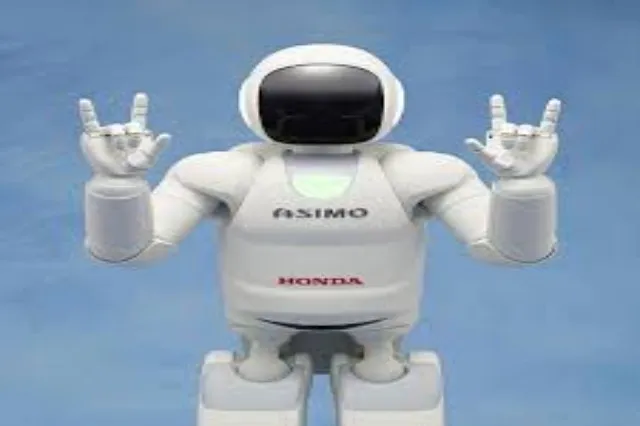
In December 2004, Honda demonstrated an updated version of its ASIMO humanoid robot capable of running at 3 km/h, a significant advance over prior versions that could only walk. The update also improved ASIMO's ability to navigate dynamically changing environments.
Background
Getting a robot to walk on two legs took decades of painstaking work. The basic problem is that a human stride is controlled falling: you tip forward, catch yourself, tip forward again. A machine has to predict where its centre of mass is heading and adjust its feet fast enough to stay upright. Get it slightly wrong and the robot is on the floor.
Honda’s engineers had been working on this since the mid-1980s, quietly and mostly out of public view. By 2000 they had something to show: ASIMO, a humanoid robot that could walk. That was genuinely hard to do, but walking is a relatively forgiving gait. Both feet touch the ground for part of every step, so there are moments of stability to fall back on. Running removes that safety net entirely. When you run, both feet leave the ground at the same time. The robot has to manage its balance through what engineers call a flight phase, a fraction of a second where nothing is touching anything. Earlier versions of ASIMO could not do this. The control systems weren’t fast enough, and the hardware wasn’t light enough, to make it work.
What happened
In December 2004, Honda showed a new version of ASIMO that could run at 3 km/h. To handle the flight phase, the robot used a method called zero-moment point control, which calculates the point on the ground where the forces acting on the robot balance out, and adjusts each footfall to keep that point inside the area of support. Running meant that calculation had to happen continuously and much faster than before, because the window for correction shrank to almost nothing.
The updated robot was also lighter and more capable in other ways. It ran on a lithium-ion battery rated at 51.8 volts. Honda’s engineers had also improved how ASIMO responded to its surroundings: the robot could adjust its path when someone stepped into its way, rather than having to stop, recalculate, and restart from scratch.
The demonstration was done in a controlled setting, not in the kind of unpredictable environment a working robot would face. But the point was to show the mechanism working, and it did. Running at 3 km/h is modest by human standards, and Honda’s engineers were not claiming otherwise. What mattered was that the flight phase had been solved well enough to work in practice.
Why it mattered
ASIMO's running capability demonstrated that stable bipedal locomotion in a humanoid robot could be extended beyond walking to dynamic gaits, a longstanding challenge in legged robotics requiring real-time balance control. Honda's iterative engineering approach, begun in the 1980s, showed a credible path toward robots that could operate in spaces built for humans. The platform influenced subsequent humanoid robotics research and set a benchmark that later systems, including Boston Dynamics designs, built upon.
Organisations
Honda Motor Co, Honda Research Institute
Sources
- ASIMO History, Honda Global. Honda Motor Co., Ltd.. Primary source
- Honda teaches Asimo to run. New Scientist. Secondary
Cite this page
AI Achievements. (2004). Honda Unveils ASIMO Version with Running Capability. Retrieved 2026-10-01, from https://achievements.ai/milestone/asimo-robot-launched-by-honda
@misc{achievements_asimo_robot_launched_by_honda,
  title  = {Honda Unveils ASIMO Version with Running Capability},
  author = {{AI Achievements}},
  year   = {2004},
  url    = {https://achievements.ai/milestone/asimo-robot-launched-by-honda}
}