First AI Winter: Lighthill Report and DARPA Funding Cuts
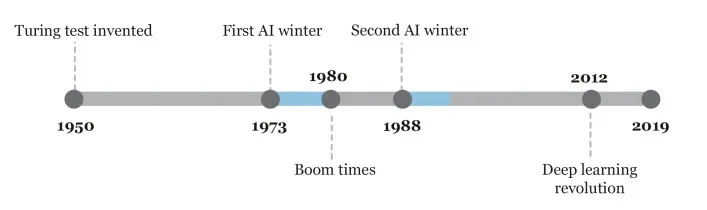
In 1973, James Lighthill's report for the British Science Research Council assessed artificial intelligence research and found it had failed to meet its goals; the report contributed to substantial funding cuts in the UK and, alongside DARPA reviews in the United States, precipitated the period known as the first AI winter.
Background
By the early 1970s, AI research had been running on optimism for nearly two decades. The field had produced genuine results: programs that could play chess, prove mathematical theorems, and parse simple sentences. But the gap between those controlled demonstrations and anything useful in the real world was wide, and getting wider.
The problem was partly technical and partly a matter of expectations. Researchers had made confident predictions in the 1950s and 1960s about how quickly machines would match human reasoning. Funders, especially government bodies in the UK and the United States, had taken those predictions seriously and given generously. By the early 1970s they were starting to ask where the results were.
Speech recognition illustrated the difficulty well. Automatic theorem proving, the task of having a computer work through logical proofs, and early robotics were in similar positions: impressive in narrow, tightly controlled conditions, and brittle everywhere else. The techniques available simply did not scale.
What happened
In 1973, Sir James Lighthill, a mathematician at the University of Cambridge, published a report commissioned by the British Science Research Council to assess the state of AI research across the country. His conclusion was blunt. He divided AI work into three categories and found that none of them had delivered on their promises. The report argued that the “combinatorial explosion” problem, the way that the number of possibilities a program has to consider grows unmanageably fast as tasks get even slightly more complex, was a fundamental obstacle that researchers had consistently underestimated.
Lighthill did not claim the work was worthless. He acknowledged progress in specific areas. But he wrote that AI had failed to produce the general-purpose results its advocates had claimed were coming, and he was sceptical that the approach would. The Science Research Council used the report as a basis for cutting support from most AI research groups in Britain. Several university departments lost funding they had depended on.
Across the Atlantic, the American Defense Advanced Research Projects Agency reached its own conclusions through its own reviews. DARPA had been funding a major speech recognition programme, the Speech Understanding Research project, much of it at Carnegie Mellon University in Pittsburgh. The programme had ambitious targets, and it did not meet them. DARPA reduced funding to that work and to several other AI programmes during 1973–1974. The contraction was broad rather than targeted: funders pulled back from the field generally, not just from the specific projects that had disappointed them. Research that had nothing to do with speech recognition lost support alongside it.
The two contractions, British and American, happened independently but reinforced each other. Together they produced a sharp reduction in the resources available for AI research that lasted through much of the rest of the decade.
Why it mattered
The Lighthill Report gave institutional and political legitimacy to scepticism about AI's near-term potential, directly causing the British Science Research Council to withdraw support from most AI research centres. In the United States, DARPA independently reduced funding to several programmes, including speech recognition work at Carnegie Mellon University, after similarly disappointing evaluations, producing a contraction in AI research funding that persisted through much of the late 1970s. Together these events established a pattern, repeated in the 1980s, in which overpromised capabilities followed by unmet benchmarks led funders to withdraw support broadly rather than selectively.
People
Organisations
British Science Research Council, Carnegie Mellon University, DARPA
Sources
- Artificial Intelligence: A General Survey (Lighthill Report). Artificial Intelligence Applications Institute, University of Edinburgh (archiving the original Science Research Council publication). Primary source
- On the Dangers of Stochastic Parrots: Can Language Models Be Too Big?. ACM FAccT 2021. Secondary
Cite this page
AI Achievements. (1973). First AI Winter: Lighthill Report and DARPA Funding Cuts. Retrieved 2026-10-01, from https://achievements.ai/milestone/first-ai-winter
@misc{achievements_first_ai_winter,
  title  = {First AI Winter: Lighthill Report and DARPA Funding Cuts},
  author = {{AI Achievements}},
  year   = {1973},
  url    = {https://achievements.ai/milestone/first-ai-winter}
}