Dasarobot Genibo QD Consumer Pet Robot
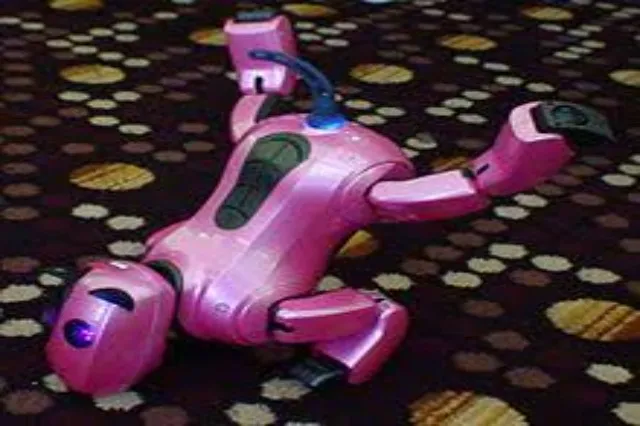
In April 2006, South Korean company Dasarobot unveiled the Genibo QD, a consumer pet robot modelled on a dog and equipped with cameras, infrared sensors, and voice-recognition software designed to simulate emotional responses to its owner.
Background
By the mid-2000s, robotic companion animals were still largely a curiosity from Japan. Sony’s AIBO, released in 1999, had shown that people would buy a robot dog if it moved convincingly and seemed to respond to them. But AIBO was expensive and positioned as a premium electronic toy rather than something a typical household might consider. Outside Japan, the category had barely moved.
The underlying technologies were maturing quietly. Small cameras cheap enough to fit inside a consumer product, infrared sensors that could detect nearby objects, and basic voice-recognition systems had all become accessible to manufacturers willing to put the engineering work in. The question was whether any company outside Japan would try to build something for a real retail market, and whether buyers would respond.
What happened
In April 2006, Dasarobot, a South Korean company, introduced the Genibo QD. The robot was built to look and behave like a dog. It carried cameras and infrared sensors, which it used to read its surroundings, and it included voice-recognition software so it could respond to spoken commands from its owner. According to coverage at the time, the Genibo QD was designed to simulate emotional states, shifting its behaviour depending on how it was treated.
The NBC News report from April 2006 described the robot responding to its environment and interacting with people in ways that went beyond simple pre-programmed motions. The sensors fed information into the control system continuously, letting the robot react rather than just perform a fixed sequence of actions. That combination of perception and reactive behaviour in a consumer-priced product was the thing Dasarobot was pitching.
Dasarobot’s own website, as captured in 2006, presented the Genibo QD as a commercial product aimed at ordinary buyers, not a research prototype or a limited-edition collector item. No sales figures have been confirmed in the sources available, and no manufacturer press release or technical documentation has been positively identified, so the actual scale of the launch remains unclear. What is clear is that a South Korean company had brought a sensor-equipped, voice-responsive companion robot to the consumer market, following a path that Sony had cut several years earlier and making it available somewhere other than Japan for the first time in any serious commercial sense.
Why it mattered
The Genibo QD represented an early commercial attempt to bring behaviour-adaptive, sensor-driven pet robotics to a consumer market outside Japan, where Sony's AIBO had pioneered the category. Its integration of voice recognition and reactive emotional states illustrated how perception and control systems were being combined in affordable companion robots. The product contributed to a broader industry exploration of social robotics beyond research laboratories.
Organisations
Dasarobot
Sources
- Robot dog wags its tail for Korean market. NBC News. Secondary
- Dasarobot official website (Internet Archive capture, 2006). Internet Archive / Dasarobot. institutional
Cite this page
AI Achievements. (2006). Dasarobot Genibo QD Consumer Pet Robot. Retrieved 2026-10-01, from https://achievements.ai/milestone/genibo-qd-a-roboic-dog
@misc{achievements_genibo_qd_a_roboic_dog,
  title  = {Dasarobot Genibo QD Consumer Pet Robot},
  author = {{AI Achievements}},
  year   = {2006},
  url    = {https://achievements.ai/milestone/genibo-qd-a-roboic-dog}
}