Schaft Inc Robot Wins DARPA Robotics Challenge Trials 2013
In December 2013, Schaft Inc, a Japanese robotics company acquired by Google in October 2013, won the DARPA Robotics Challenge Trials at Homestead Miami Speedway, Florida, scoring 27 out of 32 points across eight disaster-response tasks and finishing ahead of 15 other teams.
Background
By the early 2010s, robots could handle structured environments reasonably well. Industrial arms welded car bodies. Research platforms navigated tidy laboratory corridors. But unstructured environments, the kind you find after an earthquake or a reactor failure, were a different problem entirely. Rubble is not predictable. Valves are not positioned identically each time. A robot that relies on a perfectly mapped space fails the moment anything is out of place.
The 2011 Fukushima Daiichi accident put that gap in sharp focus. Workers could not safely enter parts of the damaged plant for weeks. If a robot could have gone in instead, even to turn a valve or drag a hose into position, it might have mattered. DARPA, the Defense Advanced Research Projects Agency, responded by setting up the DARPA Robotics Challenge, a multi-year competition to push humanoid robots toward exactly that kind of work. The Trials in December 2013 were the qualifying stage: sixteen teams competing across eight tasks, with the top scorers advancing to the finals the following year.
The hardware problem was difficult in its own right. Most research humanoids of the time were built for stability in controlled conditions. They moved slowly and fell often. High-torque joints strong enough to handle real physical work tended to come with heavy hydraulic systems, and heavy systems made balance harder. Getting a robot to climb a ladder and then close a valve, one after the other, without falling, was far beyond what most teams could reliably demonstrate.
What happened
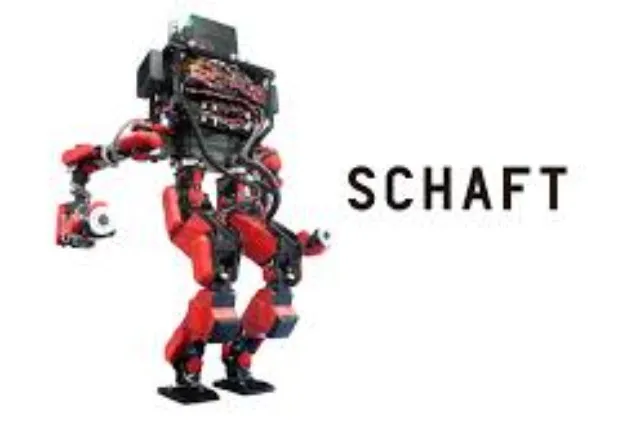
Schaft Inc, a Japanese robotics company that Google had acquired two months before the competition, entered a robot built around compact, high-torque hydraulic actuators. Where other platforms struggled with the physical demands of the tasks, Schaft’s machine moved with enough strength and stability to complete them consistently. The eight tasks covered the kind of work a disaster-response robot would actually need to do: driving a vehicle, crossing uneven ground, climbing a ladder, clearing debris, moving through doorways, cutting through a wall, closing a valve, and connecting a hose.
Schaft finished with 27 points out of a possible 32, spread across all eight tasks. The next-highest team scored 20 points. Fifteen other teams competed at Homestead Miami Speedway in Florida across the two-day event. Florida International University was involved in running the event alongside DARPA. The gap between first and second place was large enough to stand out, and the result drew attention not just to the score but to the hardware approach behind it.
The robot Schaft used was based on the HRP-2 platform, a research humanoid developed in Japan, though with significant modifications. The hydraulic actuator design was the part that drew most comment from engineers watching the competition. It gave the robot the physical authority to handle tasks that stalled or toppled other machines, without the bulk that usually came with that kind of power.
Why it mattered
The DRC Trials provided the first large-scale, standardised public benchmark for humanoid robots performing real-world disaster-response tasks, directly motivated by the 2011 Fukushima Daiichi nuclear accident. Schaft's dominant performance demonstrated that compact, high-torque hydraulic actuator designs could outperform heavier legacy platforms on dexterity and balance tasks, influencing subsequent robot hardware priorities. The event accelerated corporate investment in humanoid robotics, with Google's acquisition of Schaft being one of several robotics purchases it made in that period.
Organisations
SCHAFT Inc., DARPA, Google, Florida International University
Sources
- DARPA Robotics Challenge Trials Results. Defense Advanced Research Projects Agency (DARPA). Primary source
- DARPA's Robotics Challenge Was Won By A Super-Strong Japanese Humanoid Robot. Business Insider. Secondary
- Schaft's Robot Wins DARPA Robotics Challenge Trials. IEEE Spectrum. Secondary
Cite this page
AI Achievements. (2013). Schaft Inc Robot Wins DARPA Robotics Challenge Trials 2013. Retrieved 2026-10-01, from https://achievements.ai/milestone/hrp-2-robot-won-darpas-robotics-challenge
@misc{achievements_hrp_2_robot_won_darpas_robotics_challenge,
  title  = {Schaft Inc Robot Wins DARPA Robotics Challenge Trials 2013},
  author = {{AI Achievements}},
  year   = {2013},
  url    = {https://achievements.ai/milestone/hrp-2-robot-won-darpas-robotics-challenge}
}