James Slagle Completes SAINT: A Symbolic Automatic Integrator
In 1961, James R. Slagle at MIT completed SAINT (Symbolic Automatic INTegrator), a heuristic program that solved indefinite integration problems at the level of a first-year calculus student, demonstrating that symbolic mathematical reasoning could be encoded in a computer program.
Background
By the late 1950s, computers could do arithmetic quickly and reliably. What they could not do was manipulate symbols the way a mathematician does. Adding two large numbers is straightforward to mechanise. Working out the integral of a composite function is a different kind of task: it requires choosing a strategy, trying it, noticing when it fails and picking a different one. That is not calculation. It is reasoning.
The researchers who gathered at the early AI conferences believed, broadly, that this kind of reasoning could be captured in programs. Allen Newell and Herbert Simon at Carnegie Mellon had already shown, with their Logic Theorist in 1956 and the General Problem Solver in 1957, that a computer could search through possible steps to find a proof. But those programs worked on formal logic, a domain that had been carefully axiomatised over decades. Applying the same ideas to a concrete area of mathematics, one with the messiness of real student problems, was an open question.
Calculus integration was a reasonable test case. The rules for solving indefinite integrals are not arbitrary: there are known techniques, a recognisable set of forms, and a rough order in which a student learns to apply them. It was hard enough to be interesting, and structured enough that someone might plausibly write it down as a set of heuristics.
What happened
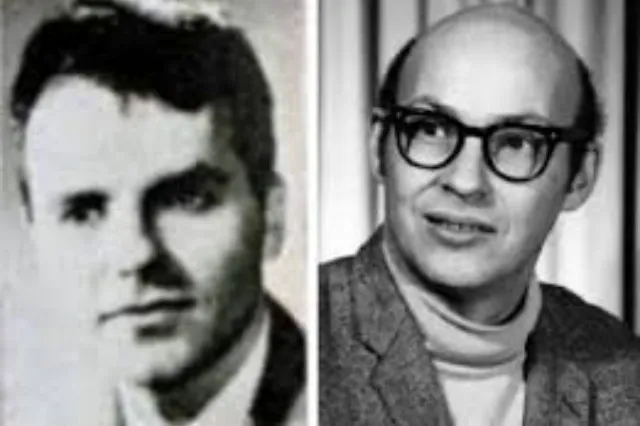
James R. Slagle, then a doctoral student at MIT, wrote SAINT (Symbolic Automatic INTegrator) as his dissertation, completed in 1961. The program attacked indefinite integration by encoding the problem as a search: it held a list of subproblems and worked through them by applying heuristic rules, which are problem-solving strategies that usually work rather than rules that always must. When a rule transformed a subproblem into a simpler form, the program pushed that new form back onto the list. When it produced a dead end, it tried something else.
The rules themselves came from the standard repertoire taught in a first-year calculus course: substitution, integration by parts, recognition of standard forms such as trigonometric identities. Slagle organised them into two groups. Some were applied directly when the form matched. Others were more speculative and could generate multiple subproblems that then had to be solved before the original problem could be closed.
Slagle tested SAINT against a set of problems drawn from the kind of examination a first-year MIT student might face. The program solved 84 of 86 problems in the test set. The two it failed on were ones that had also proved difficult for the students who sat the exam. Running on the IBM 7090 available to him at MIT, the program took on average a few minutes per problem, which was slow by any practical measure but beside the point: the question was whether symbolic mathematical reasoning could be encoded at all, and SAINT answered that it could.
Why it mattered
SAINT showed that a non-trivial domain of mathematical reasoning, symbolic integration, could be decomposed into heuristic rules and searched algorithmically, influencing subsequent work on symbolic AI and early expert systems. Slagle's thesis became a foundational reference for researchers exploring whether human expertise could be captured in rule-based programs. It contributed directly to the intellectual lineage that led to later systems such as Macsyma and to Feigenbaum's formulation of expert-system principles in the 1970s.
People
James R Slagle
Organisations
Massachusetts Institute of Technology
Sources
- A Heuristic Program that Solves Symbolic Integration Problems in Freshman Calculus: Symbolic Automatic INTegrator (SAINT). MIT DSpace (MIT Libraries). institutional
- A Heuristic Program that Solves Symbolic Integration Problems in Freshman Calculus. Journal of the ACM. Primary source
- A history of AI: From Turing to Deep Blue. Artificial Intelligence (Elsevier). Secondary
Cite this page
AI Achievements. (1961). James Slagle Completes SAINT: A Symbolic Automatic Integrator. Retrieved 2026-10-01, from https://achievements.ai/milestone/james-slagle-developed-saint-program
@misc{achievements_james_slagle_developed_saint_program,
  title  = {James Slagle Completes SAINT: A Symbolic Automatic Integrator},
  author = {{AI Achievements}},
  year   = {1961},
  url    = {https://achievements.ai/milestone/james-slagle-developed-saint-program}
}