LOVOT Companion Robot Unveiled by Groove X
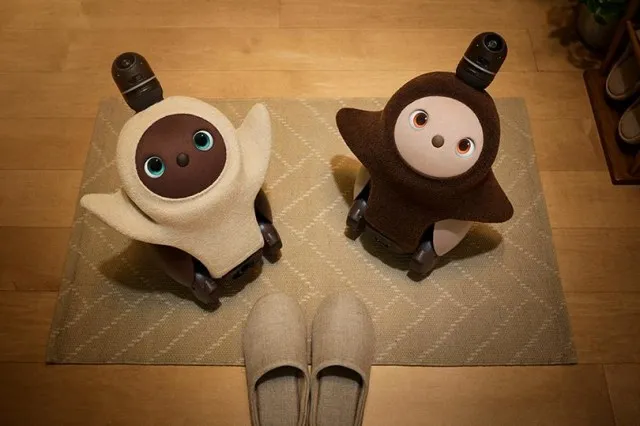
In December 2018, Groove X, a Japanese robotics company founded by Kaname Hayashi, unveiled LOVOT, a companion robot designed to elicit emotional attachment rather than perform practical tasks, equipped with more than 50 sensors, a thermal camera array, and a neural-processing unit to recognise and respond to human behaviour.
Background
Most robotics research through the 2010s was built around a straightforward idea: a useful robot does useful things. It fetches objects, assembles parts, navigates a warehouse. The harder the physical task, the more impressive the engineering. Emotional response was treated, when it was considered at all, as a side effect, not a goal.
There had been exceptions. Sony’s AIBO, a robotic dog first released in 1999, was designed partly for companionship, and researchers had explored affective computing, the field concerned with how machines detect and respond to human emotion, since the mid-1990s. But affective robotics remained mostly a research interest. Building something with enough sensors to read the emotional state of the person in front of it, and enough processing power to react plausibly in real time, was hard to package into a body small enough to sit in someone’s lap.
The sensor problem was not trivial. Detecting whether a person is relaxed or agitated requires more than a camera. Skin temperature changes. Touch patterns change. Vocalisations change. Reading all of those signals at once, quickly enough to respond naturally, demanded hardware that had only recently become small and cheap enough to fit inside a consumer product.
What happened
Kaname Hayashi, founder of the Tokyo-based company Groove X, had spent time earlier in his career working on the Honda ASIMO project. When he set up Groove X, he made a deliberate choice to build in the opposite direction from humanoid utility robots. LOVOT, the product the company revealed in December 2018, was not designed to carry things or open doors. It was designed to be held.
The hardware was more complex than the soft exterior suggested. LOVOT carries over 50 sensors, including a thermal camera array mounted in a ring around its head. That thermal ring detects the heat signatures of nearby people, so the robot can locate a person in a room even in low light, without relying on a visible-light camera alone. An onboard neural-processing unit handles the recognition work in real time, interpreting the signals from the sensor array to track who is present, how they are moving, and how they are responding to the robot.
Groove X announced the robot at a press event in Tokyo in December 2018, with a public demonstration following at CES in Las Vegas in January 2019. The company announced pricing at launch as approximately ¥349,000 per unit, with an additional monthly subscription fee covering the connectivity and cloud services the robot depends on. That placed it well above the mass-consumer bracket. Groove X positioned LOVOT explicitly as a product for emotional wellbeing, and the engineering choices follow from that: the thermal imaging, the warm body temperature, the way the robot makes eye contact and reaches toward people who hold it regularly, are all outputs of the same design philosophy rather than incidental features.
Why it mattered
LOVOT represented a deliberate departure from utility-focused robotics: Groove X explicitly positioned the device as a tool for emotional wellbeing rather than productivity, formalising a design philosophy in which affective response, not task completion, is the primary engineering goal. Its sensor suite (combining thermal imaging, microphones, and touch sensors processed by an onboard neural chip) demonstrated that embodied affective AI could be packaged in a consumer product. The robot raised substantive questions in the field about how to evaluate success for systems whose outputs are feelings rather than measurable actions.
People
Kaname Hayashi
Organisations
Groove X
Sources
- LOVOT is a robot designed purely to make you feel good. The Verge. Secondary
- LOVOT, Official Product Page. Groove X. Official
- This Adorable Robot Exists Only to Make You Feel Feelings. Wired. Secondary
Cite this page
AI Achievements. (2018). LOVOT Companion Robot Unveiled by Groove X. Retrieved 2026-10-01, from https://achievements.ai/milestone/lovot-first-emotional-robot-by-groove-x
@misc{achievements_lovot_first_emotional_robot_by_groove_x,
  title  = {LOVOT Companion Robot Unveiled by Groove X},
  author = {{AI Achievements}},
  year   = {2018},
  url    = {https://achievements.ai/milestone/lovot-first-emotional-robot-by-groove-x}
}