Google, NASA and USRA Launch Quantum Artificial Intelligence Lab
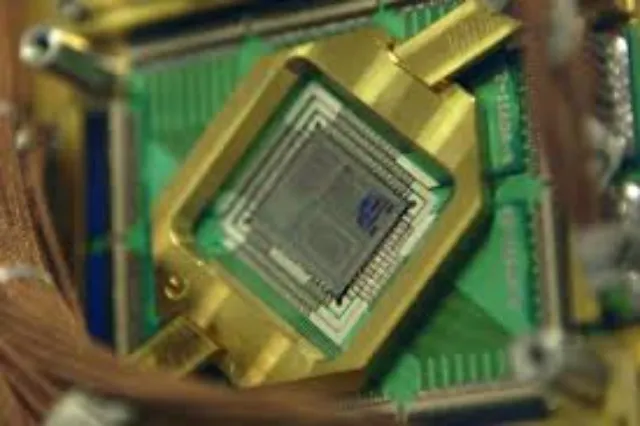
In May 2013, Google, NASA Ames Research Center and the Universities Space Research Association jointly established the Quantum Artificial Intelligence Lab at NASA's Ames facility, housing a D-Wave Two quantum processor to investigate whether quantum annealing could accelerate machine-learning tasks.
Background
By the early 2010s, machine learning researchers were spending a lot of time on optimisation problems: finding the best set of weights for a model, the best way to cluster data, the best answer from a space of possibilities so large that searching it exhaustively was out of the question. Classical computers handled these well enough for many tasks, but certain problem types were slow and expensive to solve at scale. The question was whether a different kind of hardware might do some of that work faster.
Quantum annealing is one approach to this. Where a conventional processor evaluates options in sequence (or in parallel, but still by classical means), a quantum annealer uses quantum mechanical effects to search a solution space in a physically different way, one that can, in theory, find low-energy solutions to certain optimisation problems more quickly. D-Wave Systems, a Canadian company, had been selling commercial quantum annealers since 2011. Their hardware attracted serious interest, but also serious scepticism. Nobody had yet shown, in a controlled and reproducible way, that a D-Wave machine was faster than a well-tuned classical computer on any practically useful problem.
NASA’s Ames Research Center, in California’s Silicon Valley, had its own reasons to care. Space mission planning, scheduling and image analysis all involve optimisation problems of the kind that quantum annealing was supposed to address. Google, meanwhile, was building machine-learning systems at a scale where even modest speedups in training and inference carried real consequences.
What happened
In May 2013, Google, NASA Ames Research Center and the Universities Space Research Association (USRA, a non-profit consortium of research universities that manages programmes at NASA facilities) jointly announced the Quantum Artificial Intelligence Lab. The lab was housed at NASA Ames and built around a D-Wave Two quantum processor, the most capable machine D-Wave offered at the time.
The stated aim was concrete: run machine-learning workloads on the D-Wave hardware and compare the results against classical methods. This was not a claim that quantum computing had already beaten anything. It was an organised attempt to find out whether it could, under real conditions, on problems that mattered to the partners. Google’s AI Blog post from May 2013 described the intention to test whether quantum annealing could help with the kinds of optimisation tasks that come up repeatedly in machine learning, such as training classifiers and selecting features from large datasets.
The structure of the partnership reflected what each organisation brought. Google contributed machine-learning expertise and problem sets drawn from live research. NASA Ames provided the physical facility and applied problems from its own work. USRA managed access for external researchers, meaning the lab was not entirely a closed corporate experiment: academics could apply to use the machine. Whether the D-Wave Two would prove faster than classical hardware for any of these tasks remained open. That was the point.
Why it mattered
The lab represented one of the first sustained institutional commitments to testing quantum computing hardware, specifically D-Wave's quantum annealer, against practical machine-learning workloads, bringing together a major technology company, a federal space agency, and an academic consortium. Although the practical quantum advantage for AI remained unproven at the time, the collaboration helped define the research agenda for quantum machine learning as a distinct sub-field. It also signalled that hardware investment, not only algorithmic research, was becoming a recognised bottleneck in advancing AI capability.
Organisations
Google, Ames Research Center, Universities Space Research Association, D-Wave Systems
Sources
- Launching the Quantum Artificial Intelligence Lab. Google AI Blog. Primary source
- NASA and Google to Announce New Research Partnership. NASA. Official
Cite this page
AI Achievements. (2013). Google, NASA and USRA Launch Quantum Artificial Intelligence Lab. Retrieved 2026-10-01, from https://achievements.ai/milestone/quantum-artificial-intelligence-lab
@misc{achievements_quantum_artificial_intelligence_lab,
  title  = {Google, NASA and USRA Launch Quantum Artificial Intelligence Lab},
  author = {{AI Achievements}},
  year   = {2013},
  url    = {https://achievements.ai/milestone/quantum-artificial-intelligence-lab}
}