Ekso Bionics Receives FDA Clearance for EksoGT Powered Exoskeleton
Ekso Bionics developed a powered lower-limb exoskeleton enabling individuals with spinal cord injuries and stroke-related paralysis to stand and walk in clinical rehabilitation settings, receiving FDA clearance for its EksoGT device in 2016 after earlier clearances beginning in 2014.
Background
For most of the twentieth century, the standard treatment for spinal cord injury or severe stroke left patients largely reliant on wheelchairs. Physiotherapy could help, but the mechanics of walking depend on coordinated muscle activation through the legs and core, and when the signals from the brain cannot get through, those muscles simply do not fire in the right sequence. Therapists could support a patient’s weight manually and guide their legs through the motion, but this was exhausting for staff and hard to sustain long enough to be useful.
Robotic approaches to the problem had been explored in research settings from the 1960s onward, but early devices were large, tethered to external power supplies, and needed a great deal of specialist support to operate. By the 2000s, lighter materials and better sensor technology had brought the idea of a wearable powered frame closer to practical use. The question was whether a device could read enough about a patient’s posture and intended movement, in real time, to keep them stable and upright without constant manual intervention.
Ekso Bionics, a company that grew out of research at the University of California, Berkeley, had been working on exactly that problem for several years. The company was co-founded by Russ Angold, and Eythor Bender served as CEO during the period of early clinical deployments. Their system used body-mounted sensors and an onboard control system to detect shifts in weight and posture, then drive motors at the hip and knee joints to move the legs through a walking cycle.
What happened
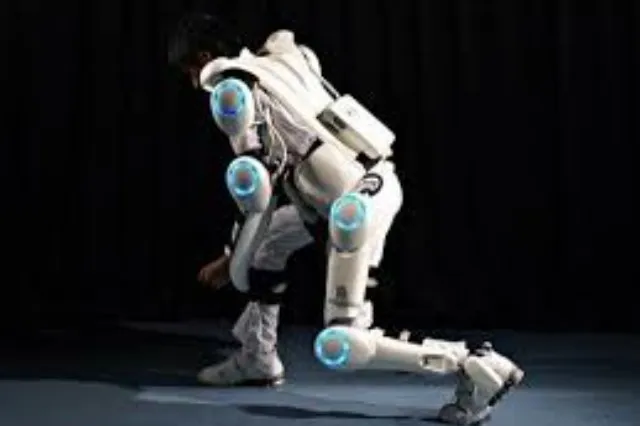
The EksoGT is a powered lower-limb exoskeleton that a patient wears over their clothing and bracing. Sensors track the user’s weight distribution and trunk movement. The control system interprets those signals and triggers the leg actuators accordingly, letting clinicians adjust how much of each step the device initiates and how much the patient must contribute. This variable assist meant the device could be tuned to a patient’s current level of function, and reconfigured as rehabilitation progressed.
Ekso Bionics received an earlier FDA clearance for a version of the device in rehabilitation settings before 2016, but the clearance for the EksoGT in March 2016 extended the device’s indicated uses to include patients with hemiplegia, a one-sided weakness typically caused by stroke, as well as people with spinal cord injuries at varying levels of severity. The clearance came through the FDA’s 510(k) premarket notification route, which requires a manufacturer to show that a new device is substantially equivalent to one already legally on the market.
The EksoGT was intended for use in clinical rehabilitation, operated under the supervision of trained physiotherapists. It was not a device patients took home. That distinction matters: clearance for supervised clinical use is a meaningful regulatory step, but it describes a device deployed in hospitals and rehabilitation centres rather than one in general commercial circulation. The technology had moved from laboratory prototype to regulated medical device, available to rehabilitation programmes willing to acquire and train staff on it.
Why it mattered
Powered exoskeletons such as EksoGT demonstrated that sensor-driven control systems could restore functional gait to people with severe neurological impairment, translating robotics and real-time biomechanical sensing from laboratory research into regulated medical devices. The FDA clearances established a regulatory pathway for AI-assisted assistive robotics, encouraging further clinical deployment of wearable robotic rehabilitation technology. This shifted exoskeleton technology from experimental demonstration to validated clinical use, influencing subsequent devices for spinal cord injury and stroke rehabilitation.
People
Russ Angold Co Founder, Ekso Bionics, Eythor Bender Ceo, Ekso Bionics at Time of Early Deployments
Organisations
Ekso Bionics Formerly Berkeley Bionics, Us Food and Drug Administration FDA
Sources
- FDA 510(k) Premarket Notification Database, Ekso Bionics Exoskeleton Clearances. US Food and Drug Administration. institutional
- EksoHealth Clinical Exoskeleton, Ekso Bionics Official Product Page. Ekso Bionics. Official
- Exoskeleton Robotics, ScienceDirect Topic Overview. ScienceDirect / Elsevier. Secondary
Cite this page
AI Achievements. (2016). Ekso Bionics Receives FDA Clearance for EksoGT Powered Exoskeleton. Retrieved 2026-10-01, from https://achievements.ai/milestone/robot-exoskeleton-designed
@misc{achievements_robot_exoskeleton_designed,
  title  = {Ekso Bionics Receives FDA Clearance for EksoGT Powered Exoskeleton},
  author = {{AI Achievements}},
  year   = {2016},
  url    = {https://achievements.ai/milestone/robot-exoskeleton-designed}
}