iRobot Roomba Launch
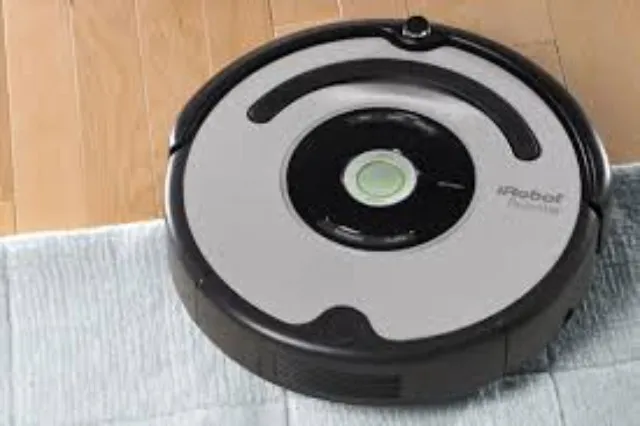
In September 2002, iRobot Corporation released the Roomba, a disc-shaped autonomous vacuum cleaner priced at USD 199. The product demonstrated that a reactive, behaviour-based robot could navigate unstructured domestic environments without maps, bringing autonomous robotics into mainstream consumer households.
Background
By the late 1990s, robots had proven themselves in factories and on Mars. They had not proven themselves in living rooms. The kind of autonomy that worked on an assembly line required fixed environments, expensive sensors and careful programming. Domestic spaces offered none of that: furniture moved, cables lay across floors, cats intervened.
The dominant assumption in earlier robotics research was that a robot needed an accurate internal map of its environment before it could act sensibly. The robot would sense the world, build a model of it, plan a route and then move. This approach worked in controlled conditions, but it was slow, computationally expensive and brittle in the face of anything unexpected.
Rodney Brooks, then at the Massachusetts Institute of Technology, had spent the 1980s arguing against this. His alternative was behaviour-based robotics: instead of building a map and planning, a robot could layer together simple reactive behaviours, each responding directly to what the sensors were picking up at that moment. The robot would not think about where it was. It would just respond. This produced systems that were cheaper and, in messy real-world environments, often more reliable than their map-dependent counterparts. Brooks had co-founded iRobot Corporation with Colin Angle and Helen Greiner in 1990, partly to put these ideas into products.
What happened
In September 2002, iRobot released the Roomba. It was a flat, disc-shaped vacuum cleaner that could move around a room on its own, cleaning as it went. The retail price was USD 199, which put it within reach of ordinary consumers rather than research institutions or wealthy early adopters.
The Roomba did not carry a map of the room and did not build one as it moved. Instead it used a set of reactive behaviours: sensors detected walls and obstacles, and the robot responded to each in real time, following patterns that covered the floor without needing to know in advance where anything was. The onboard computing was modest by any standard. That was part of the point. Keeping the hardware simple kept the cost down, and the behaviour-based approach meant the robot did not need to do the kind of heavy calculation that a planning-based system would have required.
The product found a consumer market. According to Inc. Magazine’s coverage from 2003, the Roomba sold in numbers that surprised even iRobot. It was the first time that an autonomous mobile robot, one that sensed its environment and made its own navigation decisions, had reached a general retail audience at a price that made it a plausible household purchase rather than a curiosity.
Why it mattered
The Roomba's commercial success showed that behaviour-based robotics, developed in academic settings during the 1980s and 1990s, could be translated into affordable consumer products. By avoiding expensive sensors and pre-mapped environments in favour of reactive navigation strategies, iRobot proved that useful autonomous robots did not require the computational overhead that had dominated earlier AI approaches. The product established a viable commercial market for domestic robotics and influenced subsequent generations of autonomous household devices.
People
Rodney Brooks, Colin Angle, Helen Greiner
Organisations
iRobot, Massachusetts Institute of Technology
Sources
- The Rock Stars of Research. Inc. Magazine. Secondary
- iRobot Corporation website archive, September–October 2002. Internet Archive / Wayback Machine. Official
Cite this page
AI Achievements. (2002). iRobot Roomba Launch. Retrieved 2026-10-01, from https://achievements.ai/milestone/roomba-from-the-irobot-corp
@misc{achievements_roomba_from_the_irobot_corp,
  title  = {iRobot Roomba Launch},
  author = {{AI Achievements}},
  year   = {2002},
  url    = {https://achievements.ai/milestone/roomba-from-the-irobot-corp}
}