SoftBank Robotics and Aldebaran Unveil Pepper, a Humanoid Robot with Emotion Recognition
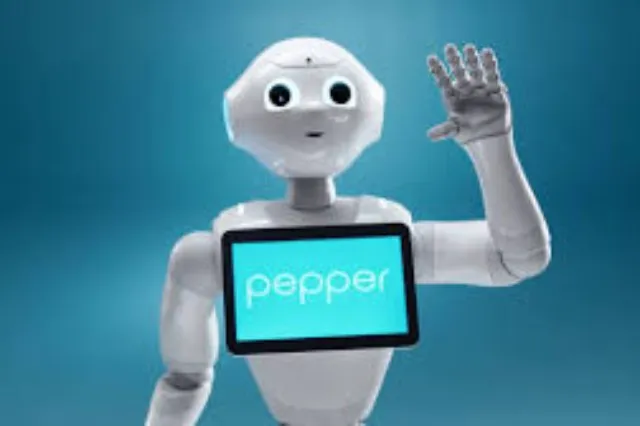
In June 2014, SoftBank Robotics and its subsidiary Aldebaran Robotics unveiled Pepper, a 1.2-metre humanoid robot equipped with an emotion-recognition system capable of detecting human facial expressions, voice tone, and body language, intended for retail and customer-service deployment.
Background
Building robots that could move and talk had been possible for years before 2014. Honda’s ASIMO could walk up stairs and wave. Various research platforms could follow simple voice commands. But these machines responded to what you did, not to how you felt. You pressed a button, you spoke a keyword, and the robot did its scripted thing. If you were confused, or nervous, or delighted, it made no difference.
Emotion recognition as a field had been developing separately in software. Researchers had trained systems to read facial expressions and classify them, or to detect emotional tone in a speaker’s voice. Affective computing, as this area is called, treats emotional state as data the machine should be able to read and respond to. The difficulty was that expressions, voice, and posture each carry partial information. Any one signal can mislead. A person might smile while saying something frustrated, or speak calmly while their posture is rigid. Systems that looked at only one channel at a time were not reliable enough to be useful in an uncontrolled public setting.
The other missing piece was cost and context. Research robots were expensive, fragile and operated in labs. Even as commercial interest grew, no company had put an emotion-aware humanoid in front of ordinary members of the public, in a shop, day after day.
What happened
In June 2014, Masayoshi Son, the chief executive of SoftBank, introduced Pepper at a SoftBank press event in Japan. The robot had been developed jointly by SoftBank Robotics and Aldebaran Robotics, the French robotics company SoftBank had acquired the previous year. Aldebaran had previously built NAO, a smaller humanoid research robot, and much of that experience fed into Pepper’s design.
Pepper stands 1.2 metres tall and is mounted on a wheeled base rather than legs. The machine carries cameras, microphones, and sensors that feed into what SoftBank called an Emotion Engine: a system that analyses facial expressions, voice tone, and body language together, rather than relying on any single channel. The aim was to let Pepper read the mood of the person in front of it and adjust how it responded, speaking differently to someone who seemed confused than to someone who seemed cheerful.
SoftBank announced Pepper at 198,000 yen, roughly 1,900 US dollars, plus a monthly fee for service and insurance. That pricing reflected a deliberate decision to sell the robot as a business tool rather than a research instrument. SoftBank planned to deploy units in its own retail stores first, giving the company a way to observe how Pepper performed with real customers before any broader rollout. The Guardian reported the announcement on 5 June 2014, and SoftBank’s own investor presentation from that date sets out the technical and commercial details. The Time coverage from September 2014 describes a later demonstration, by which point reporters could see the system operating in person.
Whether the Emotion Engine worked as well in a noisy shop as it did in a controlled demonstration was a question that would only be answered over time. But the announcement itself was the moment a major technology company committed publicly to selling emotion-aware robotics as a product, with a price tag attached.
Why it mattered
Pepper represented one of the first commercially oriented humanoid robots explicitly designed around affective computing, using multimodal sensing to adapt its behaviour to a human interlocutor's emotional state rather than responding only to explicit commands. Its announced price of 198,000 yen (roughly 1,900 USD) at launch, combined with a monthly service fee, signalled an attempt to make social robotics economically accessible to businesses. The deployment of Pepper in SoftBank retail stores and subsequently in other commercial settings provided one of the earliest real-world testbeds for emotion-aware human–robot interaction at scale.
People
Organisations
Softbank Robotics, Aldebaran
Sources
- SoftBank Corp. New Business Announcement: Pepper (Investor Presentation, June 2014). SoftBank Corp.. Official
- SoftBank unveils Pepper – a robot that recognises and reacts to emotions. The Guardian. Secondary
- SoftBank's Pepper Robot Will Know When You're Sad. Time. Secondary
Cite this page
AI Achievements. (2014). SoftBank Robotics and Aldebaran Unveil Pepper, a Humanoid Robot with Emotion Recognition. Retrieved 2026-10-01, from https://achievements.ai/milestone/the-first-robot-pepper-customer-service
@misc{achievements_the_first_robot_pepper_customer_service,
  title  = {SoftBank Robotics and Aldebaran Unveil Pepper, a Humanoid Robot with Emotion Recognition},
  author = {{AI Achievements}},
  year   = {2014},
  url    = {https://achievements.ai/milestone/the-first-robot-pepper-customer-service}
}