Netflix Prize Competition Launched by Netflix
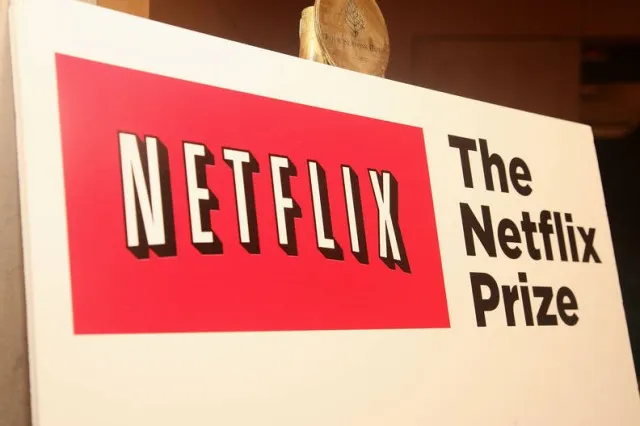
In October 2006, Netflix launched the Netflix Prize, an open competition offering $1,000,000 USD to any team that could improve the accuracy of the company's Cinematch recommendation algorithm by at least 10% on a supplied ratings dataset, measured by root mean squared error.
Background
By the mid-2000s, Netflix had tens of millions of ratings from its subscribers and a working recommendation system called Cinematch. The idea was straightforward: if you know what millions of people watched and how they rated it, you can predict what any given person will probably enjoy next. Cinematch did this using collaborative filtering, a method that looks for patterns across users rather than analysing the films themselves. If you and another person rated fifty films similarly, the system inferred you would probably agree on films you had not both seen.
The problem was accuracy. Cinematch made predictions by estimating what star rating a subscriber would give a film, and it got this wrong enough that Netflix felt it noticeably. The measure used was root mean squared error, or RMSE, which calculates the average gap between a predicted rating and the real one, with larger errors penalised more heavily than small ones. Squeezing RMSE down even slightly, across millions of predictions, meant meaningfully better recommendations in practice. Netflix’s own engineering team had been working on the problem, but progress had slowed.
What happened
In October 2006, Netflix opened the problem to the public. The company published a dataset of about 100 million ratings, stripped of identifying information, and offered $1,000,000 to the first team that could beat Cinematch’s RMSE by 10% on a held-out test set. The competition had a formal structure: teams submitted predictions, received their scores against a qualifying dataset, and could see a public leaderboard. The true test set was kept back, used only to confirm a final result when a team believed it had crossed the threshold.
The 10% target was not arbitrary. Netflix set it because that was the gap they thought would make a real difference to what subscribers saw on their screens. It also turned out to be hard enough that no team managed it quickly. Competitors tried matrix factorisation, a technique that represents both users and films as sets of numerical features and finds the combination that best explains the observed ratings, alongside many other approaches. Teams from universities, companies and private groups registered from across the world. Some published their methods openly as they went, which meant the competition generated a public body of research in parallel with the prize race itself.
The team that eventually met the threshold was BellKor’s Pragmatic Chaos, which submitted its qualifying entry in 2009. Their solution blended a large number of separate models together, a strategy known as ensembling, rather than relying on any single algorithm. As Wired reported in 2012, Netflix did not deploy the winning solution. The engineering work required to run such a complex ensemble at scale, for every recommendation served to every user, would have cost more than the improvement was worth to the business.
Why it mattered
The Netflix Prize drew over 40,000 registered teams from dozens of countries and demonstrated that open, incentivised machine-learning competitions could accelerate progress on a practical industrial problem far faster than in-house research alone. The winning ensemble methods, submitted in 2009 by BellKor's Pragmatic Chaos, advanced collaborative filtering and matrix-factorisation techniques that subsequently became standard practice in recommender-system design. The competition also surfaced important questions about the tension between model accuracy and computational feasibility, since Netflix ultimately did not deploy the winning solution because the engineering cost of the marginal gain outweighed its business benefit.
Organisations
Sources
- Netflix Prize: Rules. Netflix Prize (official competition site). Primary source
- Netflix Never Used Its $1 Million Algorithm Due to Engineering Costs. Wired. Secondary
- BellKor's Pragmatic Chaos winning solution description. Netflix Prize forum (official competition site). Secondary
Cite this page
AI Achievements. (2006). Netflix Prize Competition Launched by Netflix. Retrieved 2026-10-01, from https://achievements.ai/milestone/the-netflix-prize-competition
@misc{achievements_the_netflix_prize_competition,
  title  = {Netflix Prize Competition Launched by Netflix},
  author = {{AI Achievements}},
  year   = {2006},
  url    = {https://achievements.ai/milestone/the-netflix-prize-competition}
}