Waymo One Commercial Ride-Hailing Service Launch
In December 2018, Waymo LLC launched Waymo One, a fare-charging autonomous ride-hailing service operating in the Greater Phoenix, Arizona area, marking the first time a driverless vehicle service had been made available to paying members of the public in the United States.
Background
By the mid-2010s, most of the major technology and car companies were testing autonomous vehicles on public roads. The tests were real, in the sense that the cars were actually driving, but they were not commercial. Passengers were employees, researchers or invited volunteers. Nobody paid a fare. Nobody had to be.
That distinction mattered for a practical reason. Running a closed trial with screened participants is a different regulatory and legal problem from carrying a member of the public who bought a ticket. Insurance, liability, state licensing and federal safety standards all worked differently once money changed hands. No company in the United States had crossed that line.
Waymo, the autonomous vehicle subsidiary that Alphabet had spun out from Google’s self-driving project in 2016, had been building towards it longer than most. The company started mapping the Phoenix area years before the launch, and ran an invitation-only early-rider programme in the suburbs east of Phoenix, in places like Chandler and Tempe, before any commercial service existed. That programme let Waymo gather data from real trips, with real passengers, before the commercial step.
What happened
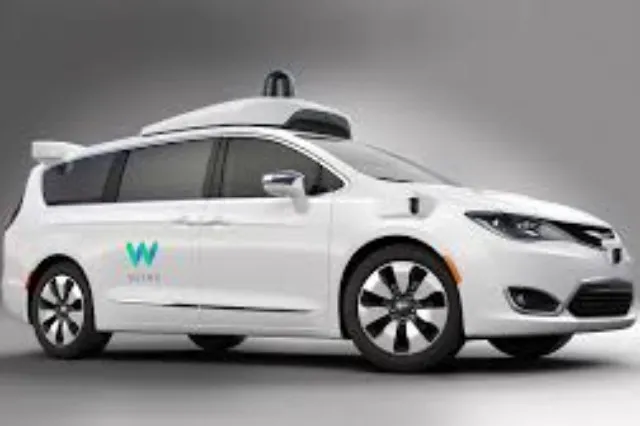
In December 2018, Waymo launched Waymo One, a fare-charging ride-hailing service available to members of the public in the Greater Phoenix area. Riders could book a car through the Waymo app. The vehicles were Chrysler Pacifica minivans fitted with Waymo’s own sensor suite: lidar (a system that measures distance by firing laser pulses and timing their return), a 360-degree radar array capable of detecting objects at up to 300 metres, and a set of cameras covering all directions around the vehicle. The data from those sensors fed into onboard systems that handled driving decisions in real time.
Supporting all of that was CarCraft, Waymo’s simulation platform, which the company used to model driving scenarios in a virtual environment. Before the launch, Waymo had run more than 5 billion simulated miles through CarCraft, testing how the system would respond to situations that would be rare or dangerous to encounter on real roads. The physical fleet had also driven several million miles on actual public roads in the years before December 2018. That combination, simulation at scale and real-world validation, was central to how Waymo built confidence in the system before putting fare-paying passengers in the cars.
The initial service area was limited, and the launch was not a full public rollout. Access was restricted to approved users in specific parts of the Phoenix suburbs. Safety drivers remained in some vehicles during the early phase. But the fares were real, the passengers were members of the public rather than employees, and the service operated under the commercial and regulatory requirements that entailed. That made it a different kind of milestone from anything that had come before in the United States.
Why it mattered
Waymo One represented the first commercially operated, driverless ride-hailing service open to fare-paying public passengers in the United States, translating years of closed trials into a live transport product. The launch demonstrated that an autonomous vehicle system could be certified, insured, and operated commercially under a real regulatory framework, establishing a procedural template for subsequent autonomous mobility services. It shifted the industry conversation from laboratory capability to operational deployment, with accountability to real passengers and state regulators rather than controlled test conditions.
Organisations
Sources
- Waymo One: The Next Step in Our Commercialization Journey. Waymo LLC (official blog). Primary source
- Waymo launches its first commercial self-driving taxi service in Arizona. The Verge. Secondary
- Waymo Launches a Self-Driving Car Service Called Waymo One. Wired. Secondary
Cite this page
AI Achievements. (2018). Waymo One Commercial Ride-Hailing Service Launch. Retrieved 2026-10-01, from https://achievements.ai/milestone/waymo-one-autonomous-car-by-waymo-llc
@misc{achievements_waymo_one_autonomous_car_by_waymo_llc,
  title  = {Waymo One Commercial Ride-Hailing Service Launch},
  author = {{AI Achievements}},
  year   = {2018},
  url    = {https://achievements.ai/milestone/waymo-one-autonomous-car-by-waymo-llc}
}