MIT Researchers Use Machine Learning to Identify Halicin, an Antibiotic Effective Against Drug-Resistant Bacteria
On 20 February 2020, James Collins and colleagues at MIT published research in Cell describing a deep-learning model trained to predict antibiotic activity; the model identified halicin, a compound previously investigated for diabetes treatment, as a potent broad-spectrum antibiotic capable of killing several drug-resistant bacterial strains.
Background
Finding new antibiotics had been difficult for decades before this. Most drug discovery programmes worked by testing large libraries of chemical compounds one by one, measuring whether each one killed bacteria in a dish. The process was slow, expensive, and limited by what chemists had already thought to make. By the late 2010s, the pipeline had almost dried up: no major new class of antibiotic had reached patients since the 1980s, and bacterial resistance to existing drugs was spreading faster than replacements could be developed.
The compounds that do get tested tend to look similar to compounds that have worked before. That is partly practical instinct and partly the way the libraries are built. It meant that huge stretches of chemical space, molecules with shapes and properties unlike anything in a standard screening collection, were never looked at. A resistant pathogen does not care about the conventions of medicinal chemistry.
Machine learning had already shown some promise in predicting the properties of molecules, but applying it to antibiotic discovery at scale was largely untested. The question was whether a model could learn what made a molecule toxic to bacteria, and do it in a way that generalised beyond the training data to find genuinely unfamiliar candidates.
What happened
In February 2020, James Collins and colleagues at MIT, working with researchers at the Broad Institute and Harvard University, published a paper in Cell describing what they had built. The team trained a message-passing neural network, a type of model that represents a molecule as a graph of atoms and bonds and passes information along those connections to build up a picture of the whole structure, to predict whether a given compound would inhibit the growth of E. coli. They trained it on about 2,500 molecules with known activity.
The researchers then ran that model across the Drug Repurposing Hub, a library of compounds that had already been tested in humans for other purposes. One compound stood out. It had originally been investigated as a treatment for diabetes and had a chemical structure unlike any antibiotic in clinical use. The team named it halicin, after HAL 9000. Jonathan Stokes, Kevin Yang, Kyle Swanson, Deborah Hung, Tommi Jaakkola, and Regina Barzilay were among the co-authors on the paper.
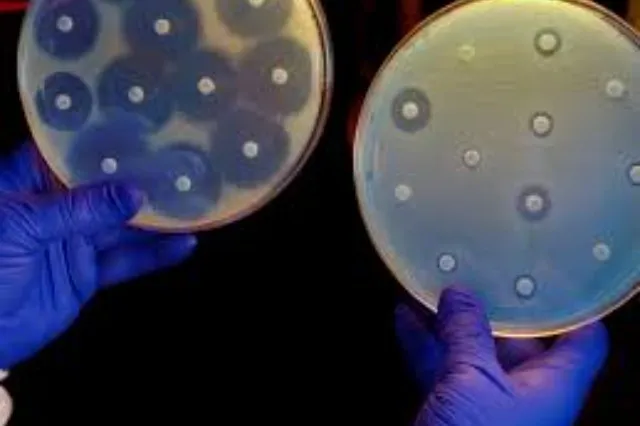
In laboratory tests, halicin killed several bacterial strains that had become resistant to most or all existing antibiotics, including Mycobacterium tuberculosis and pan-resistant Acinetobacter baumannii. It also cleared infections in mouse models. The model was then used to screen a library of about 107 million compounds; that screen identified a further set of candidates with structural features that conventional programmes would not have prioritised. The whole screen took a matter of days, where a traditional laboratory approach to the same number of compounds would not have been feasible at all.
Why it mattered
The work demonstrated that deep learning could explore chemical space far beyond conventional screening programmes, evaluating approximately 107 million compounds in a matter of days, a scale impractical for traditional laboratory methods. Halicin showed activity against pathogens including Mycobacterium tuberculosis and pan-resistant Acinetobacter baumannii in mouse infection models, suggesting the approach could address the critical shortage of novel antibiotic classes. The study established a methodological template for AI-assisted drug discovery in antimicrobial resistance research.
People
James Collins, Jonathan Stokes, Kevin K Yang, Kyle I. Swanson, Deborah Hung, Tommi S. Jaakkola, Regina Barzilay
Organisations
Massachusetts Institute of Technology, Broad Institute, Harvard University
Sources
- A Deep Learning Approach to Antibiotic Discovery. Cell (Elsevier). Primary source
- Antibiotic that kills drug-resistant bacteria discovered through AI. The Guardian. Secondary
- Artificial intelligence identifies new antibiotic. MIT News. Official
Cite this page
AI Achievements. (2020). MIT Researchers Use Machine Learning to Identify Halicin, an Antibiotic Effective Against Drug-Resistant Bacteria. Retrieved 2026-10-01, from https://achievements.ai/milestone/ai-model-screened-out-halicin
@misc{achievements_ai_model_screened_out_halicin,
  title  = {MIT Researchers Use Machine Learning to Identify Halicin, an Antibiotic Effective Against Drug-Resistant Bacteria},
  author = {{AI Achievements}},
  year   = {2020},
  url    = {https://achievements.ai/milestone/ai-model-screened-out-halicin}
}