D-Wave Systems Announces D-Wave One, a 128-Qubit Quantum Annealing Computer Available for Commercial Purchase
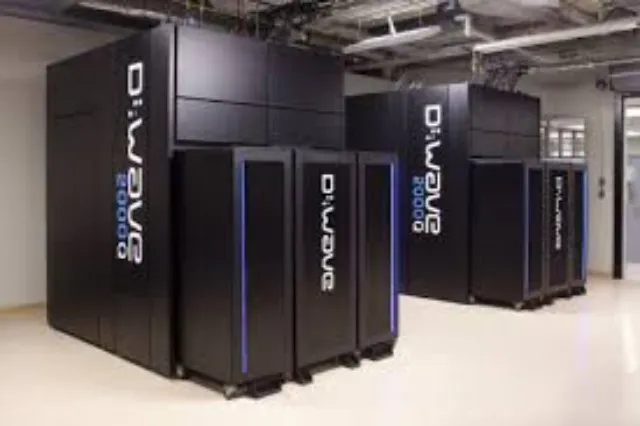
In May 2011, D-Wave Systems announced the D-Wave One, a 128-qubit quantum annealing processor codenamed Rainier, marketed as the first commercially available quantum computer. Lockheed Martin purchased a system for approximately US $10 million, making it the first known commercial transaction for a quantum computing system.
Background
By 2011, quantum computing had been a serious research topic for roughly three decades. The basic idea, that a processor exploiting quantum mechanical effects could approach certain problems in ways classical silicon could not, had been established in theory. What nobody had managed was to put quantum hardware into a box, ship it to a customer, and call it a product.
The machines that existed lived in university physics departments and national laboratories. They were experimental, fragile, and almost entirely inaccessible outside the groups that built them. Progress was real but slow, and the gap between a working laboratory demonstration and anything an organisation could buy and deploy was enormous.
One specific class of problem drew particular attention: discrete optimisation, which means finding the best solution among a very large number of possible combinations. Scheduling problems, logistics, financial modelling, and parts of machine learning all reduce to this shape. Classical computers can solve such problems, but for large instances the computation time grows very fast. Quantum annealing, a method that uses quantum effects to search for the lowest-energy state of a system (and thereby the optimal solution), looked like a plausible route to handling these problems differently.
What happened
D-Wave Systems, a Canadian company founded in 1999, had been working on quantum annealing hardware for years before 2011. In May that year they announced the D-Wave One, built around a processor they called Rainier. The chip used 128 qubits, each implemented as a superconducting loop cooled to a temperature close to absolute zero. The architecture was not a general-purpose quantum computer in the sense the field had long theorised about. It did one thing: discrete optimisation via quantum annealing. No other computation was on offer.
The physics underpinning the device was described in a paper published in Nature on 12 May 2011 by the D-Wave team, reporting on quantum annealing behaviour in a manufactured superconducting system. That paper gave the announcement its scientific grounding, though researchers outside D-Wave were quick to point out that demonstrating quantum annealing in hardware and demonstrating a speed advantage over the best classical methods are two different things.
Lockheed Martin, the American defence and aerospace company, purchased a system for approximately $10 million, a figure reported in press coverage at the time rather than confirmed in any primary technical document. That purchase made Lockheed Martin the first known commercial buyer of a quantum computing system. D-Wave marketed the device as the first commercially available quantum computer, though that claim was contested almost immediately. Critics argued that because the machine performed only quantum annealing rather than universal gate-based computation, calling it a quantum computer in the fullest sense was misleading. Whether the device achieved any genuine quantum speedup over a well-optimised classical solver became one of the more pointed debates in the field over the years that followed, studied closely in later work including a 2014 paper in Science by Rønnow and colleagues that laid out methods for testing such claims rigorously.
Why it mattered
The D-Wave One represented the first attempt to sell a quantum computing system as a commercial product, moving quantum hardware from purely academic laboratories into an industrial procurement context. Although the system performed only discrete optimisation via quantum annealing rather than universal gate-based quantum computation, and its quantum advantage over classical hardware remained actively contested in the research literature, it demonstrated that a market for quantum hardware could exist and prompted serious benchmarking efforts. That contested debate, whether D-Wave's devices offered genuine quantum speedup, itself advanced the field by establishing rigorous methodologies for comparing quantum and classical optimisers.
Organisations
D-Wave Systems, Lockheed Martin
Sources
- Quantum annealing with manufactured spins. Nature. Primary source
- Defining and detecting quantum speedup. Science. Secondary
Cite this page
AI Achievements. (2011). D-Wave Systems Announces D-Wave One, a 128-Qubit Quantum Annealing Computer Available for Commercial Purchase. Retrieved 2026-10-01, from https://achievements.ai/milestone/d-wave-one-quantum-computer
@misc{achievements_d_wave_one_quantum_computer,
  title  = {D-Wave Systems Announces D-Wave One, a 128-Qubit Quantum Annealing Computer Available for Commercial Purchase},
  author = {{AI Achievements}},
  year   = {2011},
  url    = {https://achievements.ai/milestone/d-wave-one-quantum-computer}
}