Commercial Lisp Machine Market: Symbolics and LMI
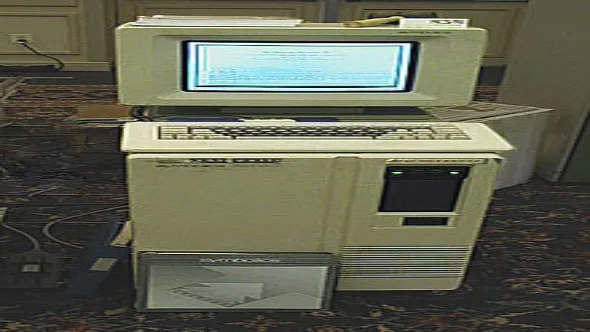
From 1980 onwards, Symbolics Inc. and Lisp Machines Inc. (LMI), both founded as spin-offs from the MIT Artificial Intelligence Laboratory, commercialised dedicated hardware workstations designed to run Lisp natively, offering large address spaces, garbage collection in hardware, and early graphical interfaces tailored to AI development.
Background
Lisp had been the working language of AI research in the United States since the late 1950s. By the 1970s, the MIT Artificial Intelligence Laboratory ran its work almost entirely on it. The problem was the hardware. General-purpose minicomputers of the era were designed around fixed data types and static memory. Lisp needs neither: it creates and destroys data structures at runtime, tracks the type of every object as the programme runs, and periodically reclaims memory that is no longer in use, a process called garbage collection. Doing all of that on hardware that did not understand it meant constant overhead. A machine that spent a significant fraction of its time managing memory plumbing was a machine that could not spend that time doing AI work.
Inside the MIT AI Lab, a group of researchers and engineers had been building towards a solution through the mid-1970s. The core idea, documented in MIT AI Memo 444 in 1977 and developed further in Memo 514 in 1979, was to build a processor that treated Lisp as a native language rather than something to be compiled down into a foreign instruction set. That meant putting type information directly into hardware, handling garbage collection in dedicated circuitry, and giving the machine an address space large enough to hold the kind of symbolic data structures AI programmes actually used.
What happened
In 1980, two companies formed from the MIT AI Lab split to commercialise that work, and they took different parts of the lab with them. Richard Greenblatt, who had been central to the original Lisp machine hardware work at MIT, founded Lisp Machines Inc. Russell Noftsker, who had managed the lab’s administration, founded Symbolics Inc. and brought with him a larger share of the technical staff, including David Moon and Thomas Knight, both of whom had worked on the MIT machine designs. The split was not amicable, and the two companies competed directly from the start.
Symbolics went on to produce the 3600 series, machines built around a tagged architecture in which every word of memory carried bits identifying its type. The hardware could check those tags and dispatch on them without software intervention, which removed much of the overhead that had made Lisp slow on conventional machines. The Genera operating system, which ran on these machines, was itself written almost entirely in Lisp, and it included a window system and interactive development tools that were well ahead of what most programmers had access to elsewhere. LMI produced machines based on closely related designs, given that both lineages descended from the same MIT work.
Neither company sold in large volumes. These were expensive, specialist workstations, priced for university AI laboratories and corporate research groups rather than for general commercial use. But within those settings they gave researchers hardware that matched the language they were already working in, and the environment around the machines, including interactive debugging, incremental compilation, and the ability to modify a running programme without restarting it, shaped how a generation of AI researchers thought about software development.
Why it mattered
Lisp machines were the first commercially available workstations purpose-built for artificial intelligence research, providing hardware support for features (such as dynamic typing, garbage collection, and large memory spaces) that general-purpose minicomputers of the era handled poorly or not at all. They also introduced or popularised several interface innovations, including bit-mapped displays, window systems, and mouse-driven interaction, that later migrated into mainstream computing. Their eventual displacement by cheaper general-purpose Unix workstations in the late 1980s contributed to the so-called AI Winter, demonstrating that specialised AI hardware could be outpaced by commodity platforms as software and compilers matured.
People
Richard Greenblatt, Russell Noftsker, Tommy Knight, David Moon, Bill Gosper
Organisations
Symbolics, Lisp Machines Inc, MIT Artificial Intelligence Laboratory, Palo Alto Research Center, Texas Instruments
Sources
- LISP Machine Progress Report (MIT AI Memo 444). ACM Digital Library / MIT AI Laboratory. Primary source
- MIT AI Laboratory Memo 514: The Lisp Machine. MIT DSpace Institutional Repository. Primary source
- Lisp: Good News, Bad News, How to Win Big (Richard P. Gabriel, 1991). ACM SIGPLAN Lisp Pointers. Secondary
Cite this page
AI Achievements. (1980). Commercial Lisp Machine Market: Symbolics and LMI. Retrieved 2026-10-01, from https://achievements.ai/milestone/lisp-machine-development-and-marketing
@misc{achievements_lisp_machine_development_and_marketing,
  title  = {Commercial Lisp Machine Market: Symbolics and LMI},
  author = {{AI Achievements}},
  year   = {1980},
  url    = {https://achievements.ai/milestone/lisp-machine-development-and-marketing}
}