Electronic Skin with Pressure Sensing Developed at University of Tokyo
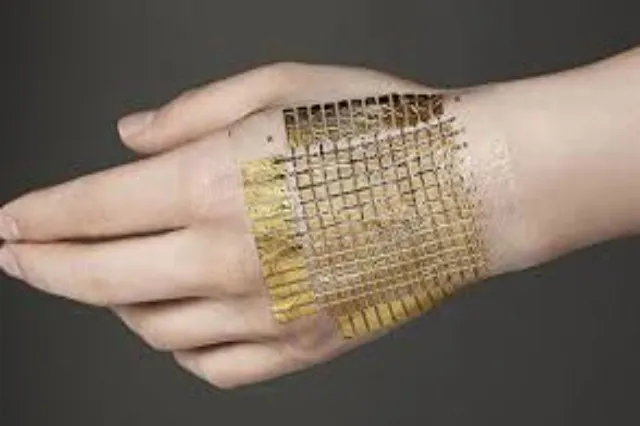
In December 2008, Takao Someya and colleagues at the University of Tokyo published research in Nature Materials describing a flexible electronic skin using carbon nanotube composite films, enabling large-area pressure sensing suitable for robotic tactile feedback and wearable physiological monitoring.
Background
For robots to handle objects the way humans do, they need something like a sense of touch spread across a surface. A fingertip that can feel pressure in one spot is useful. A skin that can feel pressure across a large area simultaneously is something else entirely. Getting there required a material that was both electrically useful and physically flexible enough to bend and stretch without cracking or losing its properties.
Conventional electronics are built on rigid substrates, typically silicon wafers or hard circuit boards. You can make them small, but you cannot make them drape over a curved surface. Researchers working on robotic hands, prosthetics and wearable sensors had been running into this wall for years. The materials that conducted electricity well enough to be useful tended to be brittle, and the materials that were flexible enough to conform to skin or a robot’s surface tended to conduct poorly, if at all.
Carbon nanotubes, tiny cylindrical structures of carbon atoms first synthesised in the early 1990s, had shown promising electrical properties in laboratory settings. The question was whether they could be processed into something you could actually coat onto a large, flexible surface without losing those properties, and without needing the extreme heat that most semiconductor fabrication requires.
What happened
In December 2008, Takao Someya and colleagues at the University of Tokyo’s Graduate School of Engineering published research in Nature Materials describing a new approach to this problem. They developed composite films made from carbon nanotubes embedded in a flexible matrix, and showed that the resulting material was highly conducting, bendable and stretchable. Critically, the films could be processed and applied at room temperature, which meant they could be deposited onto plastic substrates that would not survive the heat of conventional chip fabrication.
The team built these films into pressure-sensitive arrays, measuring how electrical resistance in the material changed when the surface was pressed. Because the sensors were distributed across a large area rather than concentrated at a single point, the system could detect where pressure was being applied and with how much force. That is the property that distinguishes electronic skin from a simple on-off pressure switch.
Someya’s group showed two specific application directions. One was robotic tactile feedback: a robot equipped with such a skin could, in principle, sense the pressure distribution across its hand while gripping an object, information needed to avoid crushing fragile things or dropping slippery ones. The other was physiological monitoring, with the material applied to something like a steering wheel so it could read a person’s pulse or other signals through contact with skin. Both remained demonstrations at this stage; the research showed the capability was physically achievable, not that a commercial product was ready.
Why it mattered
Flexible electronic skin capable of distributed pressure sensing is a prerequisite for robots that must handle objects safely and adapt grip force in real time. Someya's work demonstrated that carbon nanotube composites could be printed onto flexible substrates at room temperature, making large-area sensor arrays manufacturable for the first time. The approach influenced subsequent research into tactile sensing for prosthetics, surgical robots, and human–robot interaction.
People
Organisations
Sources
- Highly conducting, bendable, and stretchable carbon-nanotube-based conductive films for pressure-sensitive electronic skin. Nature Materials. Primary source
- Someya Laboratory – Flexible Electronics and Electronic Skin Research. University of Tokyo, Graduate School of Engineering. institutional
- The scientist turning human skin into a computer. CNN Health. Secondary
Cite this page
AI Achievements. (2008). Electronic Skin with Pressure Sensing Developed at University of Tokyo. Retrieved 2026-10-01, from https://achievements.ai/milestone/original-e-skin-by-university-of-tokyo
@misc{achievements_original_e_skin_by_university_of_tokyo,
  title  = {Electronic Skin with Pressure Sensing Developed at University of Tokyo},
  author = {{AI Achievements}},
  year   = {2008},
  url    = {https://achievements.ai/milestone/original-e-skin-by-university-of-tokyo}
}