Kirobo Robot Launched to the International Space Station
In August 2013, a consortium comprising the University of Tokyo, Toyota Motor Corporation, Dentsu Inc., and JAXA launched Kirobo, a small humanoid robot capable of speech recognition and natural-language conversation, to the International Space Station aboard HTV-4 to serve as a conversational companion for Japanese astronaut Koichi Wakata.
Background
By the early 2010s, humanoid robots had become technically impressive in narrow ways. They could walk, balance, and carry out scripted physical tasks. What they could not do well was talk. Speech recognition in robotics was mostly a laboratory matter: systems needed quiet environments, cooperative speakers, and careful calibration. Holding a fluid, unscripted conversation was harder still. Most robots that could speak at all were reading from a fixed menu of responses.
The idea of putting a conversational robot into space had obvious appeal and obvious problems. Astronauts on long missions, particularly solo periods aboard a station, face real psychological strain. But deploying any hardware on the International Space Station is extraordinarily demanding. Equipment must be compact, safe, and reliable in a way that a research prototype rarely is. Getting a conversational robot to that standard, in the early 2010s, required solving both the engineering and the dialogue problem at the same time.
What happened
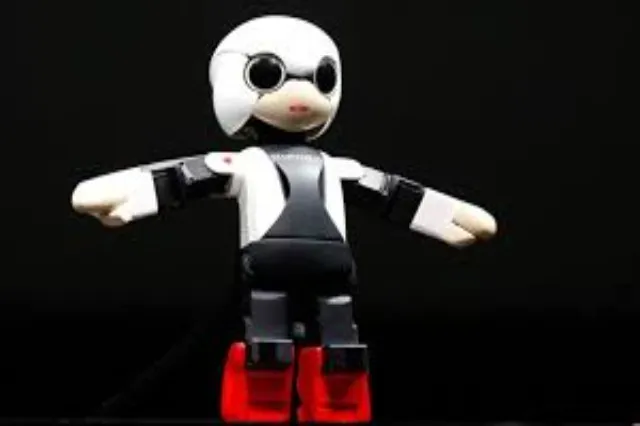
In August 2013, a small humanoid robot called Kirobo launched to the International Space Station aboard HTV-4, an unmanned Japanese cargo spacecraft. Kirobo was about 34 centimetres tall and weighed roughly one kilogram. It had been developed through a collaboration between the University of Tokyo, Toyota Motor Corporation, advertising agency Dentsu, and robot designer Tomotaka Takahashi of Robo-Garage, with support from JAXA, the Japan Aerospace Exploration Agency. The project took roughly three years to bring from concept to launch.
Kirobo was built to speak and listen in Japanese. Its core capabilities were speech recognition, which converts spoken words into text, and natural-language dialogue, which generates a meaningful response rather than just matching a keyword. On the station, it waited for the arrival of Japanese astronaut Koichi Wakata, who joined the crew later in 2013 and served as Kirobo’s main conversational partner. The two held what JAXA described as the first robot-astronaut conversation in space.
The robot was not there to do physical work. Its purpose was specifically social: to keep Wakata company, to converse, and to record data on how a human in that environment responded to a machine designed for interaction rather than utility. Kirobo could also express simple responses through facial movement and posture, giving researchers something to observe beyond the words exchanged. All of that data came back to the team on the ground.
Why it mattered
Kirobo represented an early practical test of whether a robot with natural-language processing and rudimentary affective response capabilities could provide meaningful social and emotional support to humans in isolated, high-stress environments such as long-duration spaceflight. The project generated research data on human–robot interaction under conditions that are difficult to simulate on Earth, informing subsequent work on socially assistive robotics. Its deployment also demonstrated that consumer-facing speech and dialogue technologies had matured sufficiently to operate reliably outside laboratory and industrial settings.
People
Koichi Wakata, Tomotaka Takahashi
Organisations
University of Tokyo, Toyota, Dentsu, Japan Aerospace Exploration Agency JAXA, Robo Garage
Sources
- Kirobo robot blasts off to space station. BBC News. Secondary
- Kirobo: A Small Robot Headed to the International Space Station. Toyota Motor Corporation. Official
- Robot Experiment on ISS, Kirobo. Japan Aerospace Exploration Agency (JAXA). Primary source
Cite this page
AI Achievements. (2013). Kirobo Robot Launched to the International Space Station. Retrieved 2026-10-01, from https://achievements.ai/milestone/talking-robot-astronaut-kirobo
@misc{achievements_talking_robot_astronaut_kirobo,
  title  = {Kirobo Robot Launched to the International Space Station},
  author = {{AI Achievements}},
  year   = {2013},
  url    = {https://achievements.ai/milestone/talking-robot-astronaut-kirobo}
}