Blue Brain Project Launch
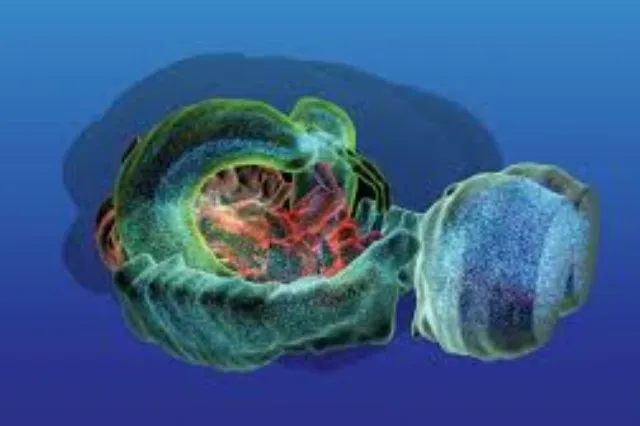
In 2005, neuroscientist Henry Markram at the École Polytechnique Fédérale de Lausanne launched the Blue Brain Project in collaboration with IBM, with the goal of constructing a biologically detailed computational model of the mammalian neocortical column using an IBM Blue Gene/L supercomputer.
Background
By the early 2000s, neuroscientists understood a great deal about individual neurons: their shapes, their electrical behaviour, how they fired in response to input. What they could not do was watch all of that happen at once, across a whole circuit, in a way that was detailed enough to be biologically meaningful.
The dominant approach to computational neuroscience at the time used simplified, abstract models. A neuron might be represented as a single point that either fired or did not. That was useful for studying patterns of activity across large networks, but it threw away most of the biology. Real neurons have elaborate branching structures, and the shape of those branches affects how signals travel through the cell. Getting that detail into a simulation, across thousands of cells talking to each other, was beyond what most computing hardware of the period could handle.
There was also a data problem. Even if the hardware had existed, building an accurate simulation required measurements from real tissue: the exact geometry of individual cells, recordings of how they responded to electrical stimulation, catalogues of the different cell types present in a given region and how they connected. Assembling that kind of dataset was slow, painstaking work, and no group had yet tried to use it as the direct input to a large-scale simulation.
What happened
In 2005, Henry Markram, a neuroscientist at the École Polytechnique Fédérale de Lausanne, launched the Blue Brain Project in partnership with IBM. The goal was to build a computationally detailed simulation of the neocortical column, a small repeating unit of mammalian brain tissue that runs from the surface of the cortex down through its layers. Markram’s group had spent years collecting the morphological and electrophysiological data needed to describe the cells in that column with real biological precision.
The simulation ran on an IBM Blue Gene/L supercomputer. Each neuron in the model was represented using a multicompartmental approach, meaning the cell was divided into many small sections to capture how its branching geometry shaped electrical signals moving through it. This was a much finer level of detail than point-neuron models allowed. The column modelled contained thousands of neurons, and each one was constrained by actual measurements rather than generic parameters.
What the project produced, in its early phase, was a working simulation that could be examined and compared against laboratory recordings. That was the point: not to demonstrate a particular score on a benchmark, but to create a system where the biological assumptions were explicit, testable and grounded in real data. Markram described the ambition and the method in a 2006 paper in Nature Reviews Neuroscience, which stands as the primary account of what the project set out to do and how it was constructed.
Why it mattered
The Blue Brain Project was among the first large-scale attempts to simulate neural circuitry at the level of individual neurons and their synaptic connections, using real morphological and electrophysiological data rather than abstract approximations. It established a methodological precedent for subsequent national and international brain-simulation programmes, including the Human Brain Project. The project also demonstrated that high-performance computing infrastructure originally developed for physics could be repurposed for detailed biological modelling.
People
Organisations
Swiss Federal Institute of Technology in Lausanne, IBM
Sources
- The Blue Brain Project. Nature Reviews Neuroscience. Primary source
- Simulating the Neocortical Column, The Blue Brain Project. IEEE Engineering in Medicine and Biology Society. Secondary
- Blue Brain Project, Official Project Page. École Polytechnique Fédérale de Lausanne. Official
Cite this page
AI Achievements. (2005). Blue Brain Project Launch. Retrieved 2026-10-01, from https://achievements.ai/milestone/the-blue-brain-project
@misc{achievements_the_blue_brain_project,
  title  = {Blue Brain Project Launch},
  author = {{AI Achievements}},
  year   = {2005},
  url    = {https://achievements.ai/milestone/the-blue-brain-project}
}